Image courtesy of the ZMEScience, via Wikimedia Commons, used under CC BY 4.0.
Gem of the Month: Pyrite
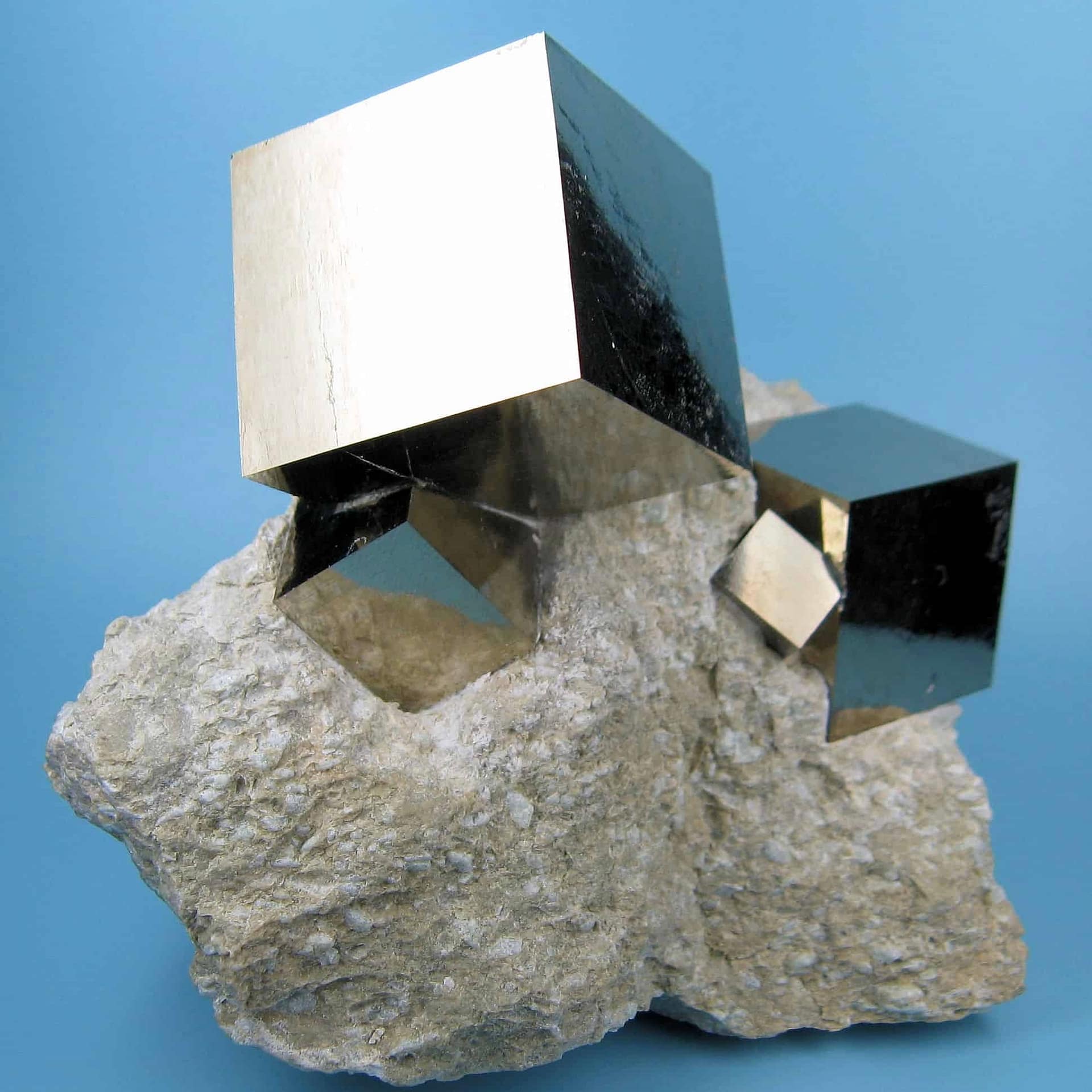
Pyrite is a metallic-looking iron sulfide mineral, often called “fool’s gold” because its brassy color and luster can resemble gold. It has a shiny, cubic/pyritohedral appearance and forms commonly in sedimentary and hydrothermal environments.
Where Found: Notable mining/specific regions include Spain, Portugal, Italy, France, Germany, Romania, the United States (notably the western mining districts), Peru, Morocco, and China.
Fun Fact: Fire‑starter: Its name comes from the Greek pyr (“fire”) because striking pyrite against metal produces sparks. Romans used it for fire‑making.
Image courtesy of freepik.com, used under CC BY 4.0.
Fossil of the Month: Amber
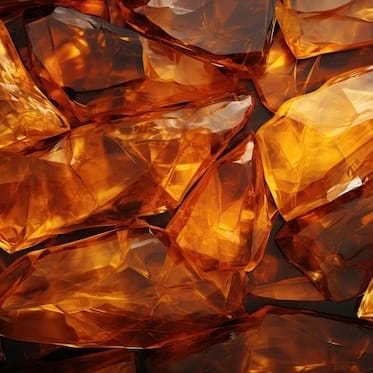
Amber is fossilized tree resin that has hardened over millions of years. It ranges in color from pale yellow to deep orange-brown, often with air bubbles or trapped insects.
Where Found: Mainly in North Europe and the Baltic region (including Lithuania, Latvia, Estonia, Poland, and Russia), and also in parts of the UK, Germany, and the Dominican Republic. In addition, smaller deposits occur in Mexico, Myanmar, and Canada.
Fun Fact: The very word electricity comes from amber. When ancient Greek philosopher Thales rubbed amber and noticed it could attract bits of straw and produce tiny sparks, he named the phenomenon after ēlektron — the Greek word for amber.
Earth Science News — August Highlights
Crab-like claws in a 100-million-year-old amber insect (Myanmar) A tiny Cretaceous-era true bug preserved in Myanmar amber was found to have large crab‑like pincers on its front legs, a feature almost never seen in insects. Researchers determined these unusual claws evolved independently, making the fossil—Carcinonepa libererrantes—only the fourth known insect lineage to develop such structures. Read more
First amber with insects preserved in South America (112 million years ago, Ecuador) — A newly discovered 112‑million‑year‑old amber deposit in Ecuador contains 21 exquisitely preserved insects, marking the first time South American amber has been found with any life trapped inside. The fossils reveal a humid Cretaceous forest ecosystem in Gondwana and provide rare insight into ancient biodiversity and environmental conditions. Read more
New mineral garnet found in a Mars meteorite Scientists analyzing the Martian meteorite NWA 8171 discovered garnet inside it—marking the first time this mineral has ever been identified in a sample from Mars. The find suggests previously unknown high‑temperature or high‑pressure processes on the planet and could offer new clues about Mars’s deep geological history. Read more
AGAMS Spotlight
July Trip to Franklin NC Gem Shows: If you’ve ever been in Franklin during May or July, you know the whole town seems to shift into gem‑show mode. Highlands Road becomes this long stretch of tents, warehouses, and pop‑up vendors, and you can wander from one show to the next without ever losing that sense of I wonder what I’ll find next.
The G&LW Gem Shows feel like the “serious business” part of the trip — buyers, shop owners, and long‑time dealers talking shop, comparing materials, and hunting for inventory. Even if you’re not buying wholesale, it’s fun to see what’s new and what people are excited about.
Then you step outside and the vibe shifts. The Highlands Road shows are more relaxed and hands‑on. You can dig through buckets of rough, chat with miners who just pulled material out of the ground, and stumble across fossils, beads, and quirky treasures you didn’t even know you wanted. It’s part shopping, part scavenger hunt.
The Macon County Gemboree adds a friendly, hometown feel — club members, demonstrations, and vendors who love talking about the area’s mining history. It’s the kind of show where you end up learning something just by standing in the right spot for a few minutes.
Going to all these shows isn’t just about buying stones. It’s about the conversations, the stories, the unexpected finds, and the sense that everyone around you is there because they genuinely love this stuff. That’s what keeps people coming back year after year.
Kids Corner Mini‑Feature — August
Amber Time Capsule Craft
Goal: Understand how amber preserves ancient insects and plant pieces.
Materials
• Clear school glue
• Small plastic cup or lid
• Tiny natural items: leaf bits, grass, flower petals (no insects)
• Yellow/orange food coloring
• Toothpick
Steps
1. Add glue to the cup until it’s about ½ full.
2. Mix in one drop of yellow or orange coloring.
3. Drop in your tiny “specimens.”
4. Use the toothpick to gently position them.
5. Let dry for 24–48 hours.
6. Pop out your “amber” and examine what’s trapped inside.